Why Choose a Submersible Dirty Water Pump for Your Needs?
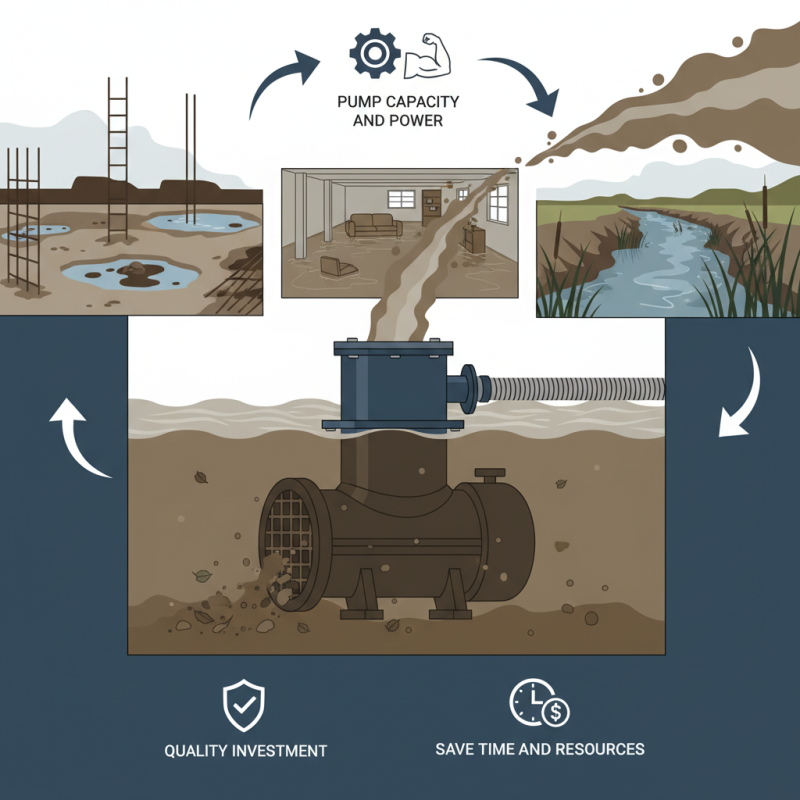
Choosing the right pump for your needs is crucial. A submersible dirty water pump offers distinct advantages. It provides effective solutions for various challenging environments.
These pumps are designed to handle contaminated water, ensuring better performance. They work efficiently in construction sites, flooded basements, and drainage tasks. This versatility makes them an ideal choice for many users.
Yet, some may overlook their critical features. Understanding pump capacity and power is essential. Users must remember that not all pumps are created equal. A thoughtful selection can prevent future problems. Investing in a quality submersible dirty water pump can ultimately save time and resources.
Benefits of Using Submersible Dirty Water Pumps in Various Applications
Submersible dirty water pumps are essential in various applications. Their versatility makes them ideal for construction sites, industrial settings, and even residential uses. According to a report by Grand View Research, the global submersible pump market is expected to reach 37.6 billion USD by 2030. This growth reflects their increasing demand in many fields.
These pumps excel in handling muddy, solid-laden water. Traditional pumps struggle in such conditions, often leading to breakdowns. However, submersible dirty water pumps can effectively manage debris without clogging. A study from Research and Markets indicates that submersible pumps can increase efficiency by up to 40% in dirty water applications. Users report faster drainage and fewer interruptions.
Operational efficiency is not the only benefit. Submersible pumps are often quieter than above-ground alternatives. They can operate in enclosed spaces without significant noise pollution. However, one issue is the possible difficulty in maintenance. Users may overlook routine checks, leading to malfunction. Regular inspection can ensure longevity and performance, preventing unplanned downtime.
Key Features to Look for in a Submersible Dirty Water Pump
When selecting a submersible dirty water pump, it’s essential to consider key features that match your specific needs. The power of the motor matters greatly. Pumps can vary from 0.5 to 3 horsepower. A more powerful motor will handle larger volumes and heavier debris efficiently. According to industry data, pumps with higher horsepower can manage up to 30,000 gallons per hour in some cases, making them suitable for commercial use.
Another crucial factor is the pump’s maximum head height. This is the highest point a pump can lift water vertically. Successful operations often require pumps with a head height of 20 feet or more. Additionally, the materials used in the pump’s construction influence its durability. High-quality thermoplastic or cast iron options are recommended for longevity. However, it's essential to remember that not all materials perform well in aggressive environments.
Lastly, the size of the discharge opening impacts flow rate and debris handling. A 2-inch opening typically permits better flow for dirty water than smaller sizes. Yet, users often underestimate the implications of these features. Neglecting to assess compatibility with existing drainage systems can lead to inefficiencies. In some reports, improper pump selection caused delays in construction projects, highlighting the importance of informed decision-making.
Why Choose a Submersible Dirty Water Pump for Your Needs? - Key Features to Look for in a Submersible Dirty Water Pump
| Feature |
Description |
Importance |
| Pump Capacity |
The amount of water the pump can move per hour, usually measured in gallons or liters. |
Determines how quickly you can remove water from a flooded area. |
| Max Head |
The maximum height the pump can lift water, measured in feet or meters. |
Essential for applications where water needs to be moved vertically. |
| Material |
The materials used in the construction of the pump, such as thermoplastic or stainless steel. |
Affects durability, resistance to corrosion, and suitability for dirty water. |
| Float Switch |
An automatic device that turns the pump on or off based on water levels. |
Saves energy and prevents overflow by automatically managing the pumping process. |
| Power Source |
Whether the pump is powered electrically or by gasoline. |
Influences pump location and operational convenience, especially in remote areas. |
| Portability |
The ease with which the pump can be moved from one location to another. |
Important for multiple applications and ease of use in various locations. |
| Warranty |
The length and terms of coverage provided by the manufacturer. |
Indicates the reliability of the product and the manufacturer's confidence in it. |
Comparison Between Submersible and Above-Ground Pumps
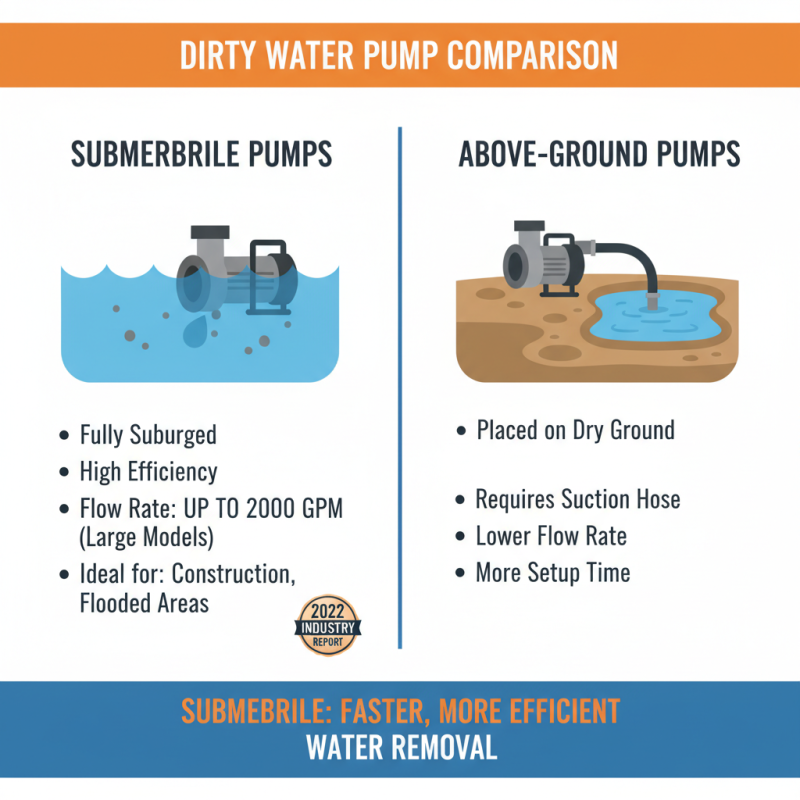
When considering submersible dirty water pumps, a key factor is the comparison with above-ground pumps. Submersible pumps are designed to be submerged in water, making them highly efficient for transferring dirty or contaminated water. According to a 2022 industry report, submersible pumps can maintain a higher flow rate, often up to 2000 gallons per minute for larger models. This efficiency is crucial in construction sites or flooded areas where quick removal of water is essential.
On the other hand, above-ground pumps typically require priming and are less effective at handling debris. They also struggle with suction lift, particularly in deep water scenarios. A study by the Pump Industry Association revealed that above-ground pumps lost up to 30% efficiency due to these factors. This shows that while above-ground pumps may be simpler, they come with significant limitations in high-demand environments.
It's important to reflect on the unique needs of each project. Submersible pumps often have a higher upfront cost, but their long-term efficiency can offset that. For smaller jobs, above-ground pumps could suffice, but the risk of clogging and maintenance issues must be considered. Balancing upfront costs with ongoing efficiency is key in selecting the right pump for your needs.
Maintenance Tips for Optimal Performance of Submersible Pumps
Maintaining a submersible dirty water pump efficiently is crucial for keeping it running smoothly. Regular inspections can help catch issues early. Check the power cord for any signs of wear or damage. Ensure that the pump's intake screen is clear. Clogs can drastically reduce efficiency. Clean it often, especially in muddy water environments.
It’s also important to monitor the pump’s operating environment. Sudden temperature changes can affect performance. If the pump struggles to start, it may signal a more serious problem. Keep an eye out for unusual noises. A grinding sound could indicate worn-out parts that need replacement. Be proactive in addressing these concerns to avoid unexpected failures.
Occasional fluid changes are necessary, too. If the pump operates in heavy sediment, sediment buildup can hinder performance. Use a soft brush to remove buildup around the casing. Also, check the seals periodically. They can wear out over time and require replacement for optimal functionality. A little attention can lead to better reliability and longevity.
Submersible Dirty Water Pump Performance Comparison
This chart illustrates the performance of different submersible dirty water pumps based on their flow rates and power consumption. The data represents three common models, showcasing their efficiency in various scenarios.
Common Applications for Submersible Dirty Water Pumps in Different Industries
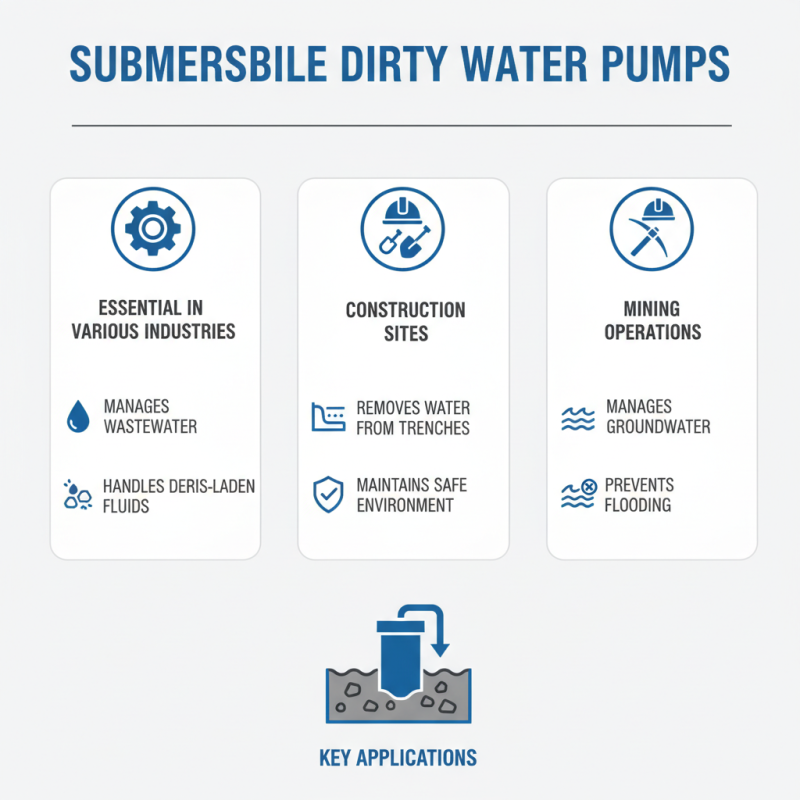
Submersible dirty water pumps are essential in various industries. They effectively manage wastewater and debris-laden fluids. Construction sites often require these pumps to remove excess water from trenches and pits. This helps maintain a safe working environment. Additionally, mining operations rely on these pumps to manage groundwater.
In agriculture, submersible dirty water pumps are used for irrigation purposes. They can easily move water from one area to another. This is crucial, especially during droughts. These pumps are versatile and can handle solid particles. They are not just for clean water.
Municipalities frequently utilize these pumps in sewage treatment. They help transport wastewater to treatment facilities. However, sometimes they experience blockages. Regular maintenance is crucial to prevent failures. In challenging conditions, operators must remain vigilant. The reality is that even reliable equipment can falter.