How to Choose the Best Small Water Pump for Your Needs?
Choosing the right small water pump can be daunting. The market is filled with diverse options tailored for various applications. Smaller pumps offer unique benefits for home and garden use, but not every model fits your specific needs.
According to industry reports, small water pumps can be categorized based on flow rate, pressure, and intended purpose. For instance, a pump with a flow rate of 300 gallons per hour is suitable for garden irrigation. In contrast, lower capacity pumps might be better for aquariums or draining small spaces. Miscalculating these requirements can lead to inefficient operation and wasted resources.
Moreover, understanding pump features is crucial. Many pumps are designed for durability and energy efficiency, yet some may not be user-friendly. Consumers often overlook the importance of warranty and support, which can be vital when facing mechanical issues. A small water pump must not just meet your needs; it should also offer reliability and ease of use.
Understanding Your Water Pump Requirements
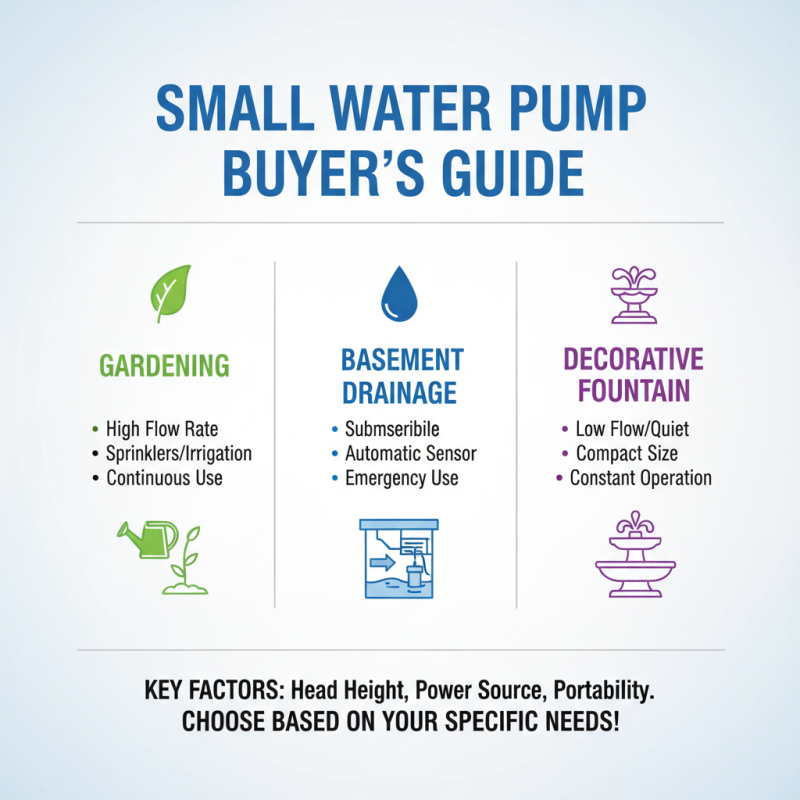
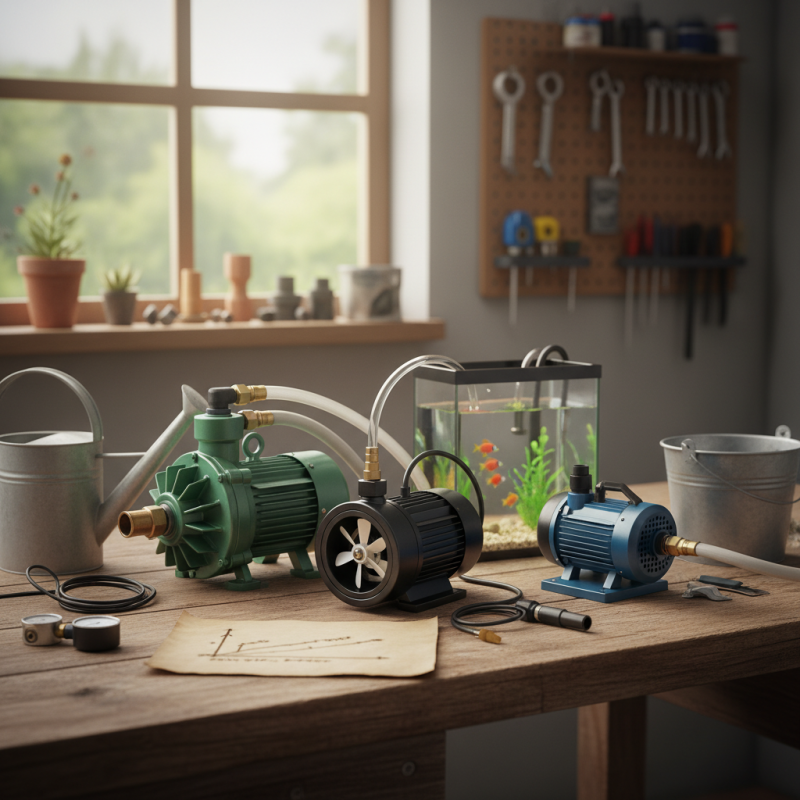
Choosing the right small water pump starts with understanding your specific needs. Are you using it for gardening, draining a basement, or maybe for a small fountain? Different tasks require different features. For example, if you need a pump for a large garden, look for higher flow rates. If you're draining a small area, a compact model might be sufficient.
Consider the source of your water. Is it clean, or does it contain debris? Some pumps can't handle solids without clogging. If your water is murky, a self-priming option can be a lifesaver. Pay attention to power source requirements. Electric pumps might require an outlet, while gas-powered pumps offer more mobility.
Reflection on your usage helps too. Do you plan to use the pump infrequently or daily? This may affect the durability you need. Lastly, think about maintenance. Some pumps require more upkeep than others. What will your schedule allow? Understanding these elements can help in making the right choice.
Assessing Different Types of Small Water Pumps
When choosing a small water pump, it’s essential to consider the various types available. Submersible pumps are popular for their ability to work underwater. They are ideal for draining flooded areas or emptying pools. However, these pumps can be challenging to maintain and may require additional accessories. If you're not careful, they can wear out quickly.
Another option is the inline pump. These pumps sit above the water and often have better flow rates. They are suitable for tasks like irrigation or aquariums. Though not as compact, they can be more durable. Still, their installation can be complex.
Solar-powered pumps are gaining popularity, especially for environmentally conscious users. They rely on sunlight, which reduces electricity costs. However, their performance may decrease on cloudy days. Assessing your specific needs is crucial. Taking time to evaluate each type will help ensure you select the right pump for your situation.
Comparison of Small Water Pump Types
Key Features to Consider When Choosing a Water Pump
When choosing a small water pump, consider several key features. Start with the pump's flow rate. This determines how much water it can move in a given time. If you need quick drainage, look for a higher flow rate. Too low, and the task will take longer than necessary.
Next, think about the pump's power source. Electric pumps are convenient, but battery-operated options are great for remote locations. Consider where you'll use the pump. Accessibility to power is crucial. Also, check the pump's size. A compact model can fit in tight spaces. But, don’t forget that smaller models may lack power.
Tips: Always assess your water source. Is it clean or muddy? Filter features may be necessary. Maintenance is another concern. Some pumps require little effort, while others may need frequent checks. Ensure you are ready for the upkeep.
Lastly, evaluate the materials used in the pump’s construction.
Plastic may be lightweight, but it might not last long. Metal pumps are durable but can be heavy.
Balance weight and durability based on your needs. Reflect on your long-term goals.
Sometimes, cheap options might lead to higher costs later.
Comparing Costs and Brands of Small Water Pumps
When selecting a small water pump, costs and brands matter significantly. A recent industry report indicated that the average price range for small water pumps is between $50 to $300. Budget constraints often limit options. Buyers frequently struggle with features versus costs. Some pumps may seem affordable but can have high maintenance costs. This hidden expense can be overlooked.
Brand reputation plays a crucial role in the purchasing decision. Well-known brands typically offer better customer support and warranties. However, lesser-known brands may provide similar features at lower prices. An industry survey showed that 65% of consumers opt for trusted brands, but many report satisfaction with less recognized options. Users need a balance between brand reliability and affordability.
Consumers often face dilemmas. Some prioritize price over performance. Others focus too closely on specifications without considering actual usage. It is important to evaluate needs critically. A pump that excels in one area may fall short in another. personal experience with pump maintenance can also influence opinions. Buyers are advised to look at reviews and user feedback before making decisions.
How to Choose the Best Small Water Pump for Your Needs? - Comparing Costs and Brands of Small Water Pumps
| Pump Type |
Flow Rate (GPH) |
Max Head (Feet) |
Power (Watts) |
Price Range (USD) |
| Submersible Pump |
3000 |
20 |
400 |
100 - 200 |
| Diaphragm Pump |
1500 |
15 |
300 |
80 - 150 |
| Centrifugal Pump |
2500 |
25 |
500 |
200 - 300 |
| Self-Priming Pump |
1200 |
18 |
350 |
150 - 250 |
| Submersible Utility Pump |
2000 |
10 |
500 |
75 - 175 |
Maintaining and Troubleshooting Your Water Pump
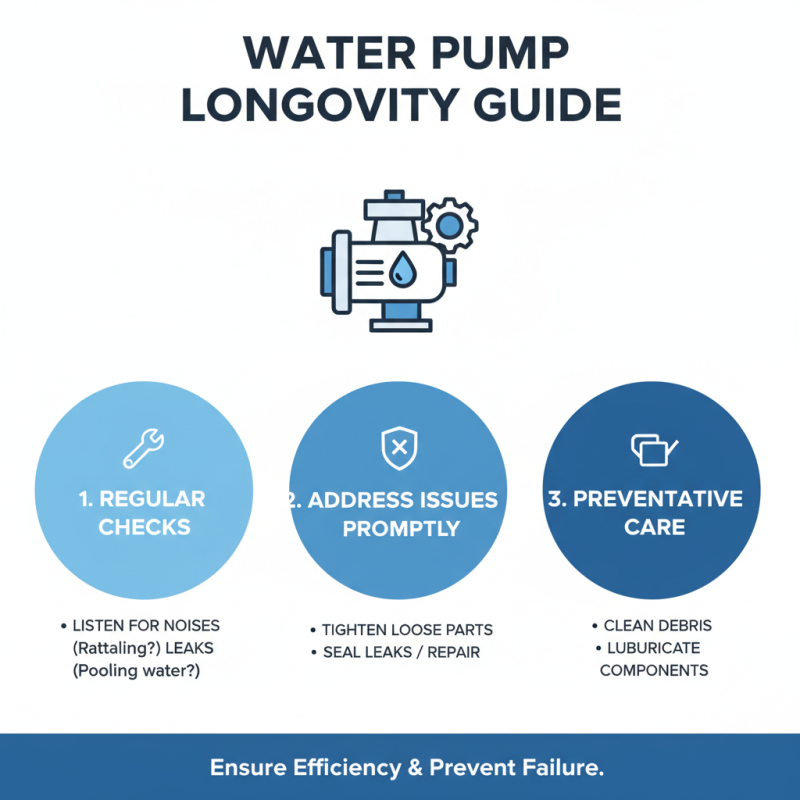
Maintaining your water pump is crucial for its longevity and efficiency. Regular checks can prevent many common issues. Listen for unusual noises. Vibration or rattling can indicate loose components. If you notice leaks, address them immediately. Water pooling around the pump can cause electrical failures.
Cleaning is another essential step. Debris can clog intakes or filters. A thorough inspection can save you future headaches. If the pump isn't getting enough water, it may struggle to perform. Check the intake screen regularly. Sometimes, even minor blockages can lead to major problems.
When troubleshooting, don’t overlook the basics. Ensure the pump is plugged in and powered. Sometimes, the simplest solutions are overlooked. If it still doesn't work, consult the user manual for guidance. Documenting problems can help identify patterns. It's okay to ask for help if needed. After all, understanding your equipment takes time and practice.