Ultimate Guide to Choosing the Best Irrigation Pump for Your Garden Tips
When it comes to ensuring your garden thrives, choosing the right irrigation pump is a crucial decision. According to renowned irrigation expert Dr. Thomas Green, "Selecting the right irrigation pump is not just about efficiency; it's about creating a sustainable ecosystem for your plants." This sentiment resonates deeply with many gardeners and landscaping professionals who understand that a well-chosen irrigation pump can lead to healthier plants and a more vibrant garden.
The market offers a variety of irrigation pumps designed to meet different watering needs, each with its own unique specifications and capabilities. From submersible pumps to surface pumps, gardeners must consider factors like flow rate, pressure, and the specific needs of their garden when making a selection. By understanding these components, you can ensure that your irrigation system operates effectively, providing your plants with the right amount of water they require to flourish.
Ultimately, investing time and effort into choosing the best irrigation pump can significantly enhance your gardening experience. In this guide, we will delve into essential tips and considerations that will aid you in making an informed decision, ensuring that your garden remains lush and healthy throughout the growing seasons.
Understanding the Different Types of Irrigation Pumps Available in the Market
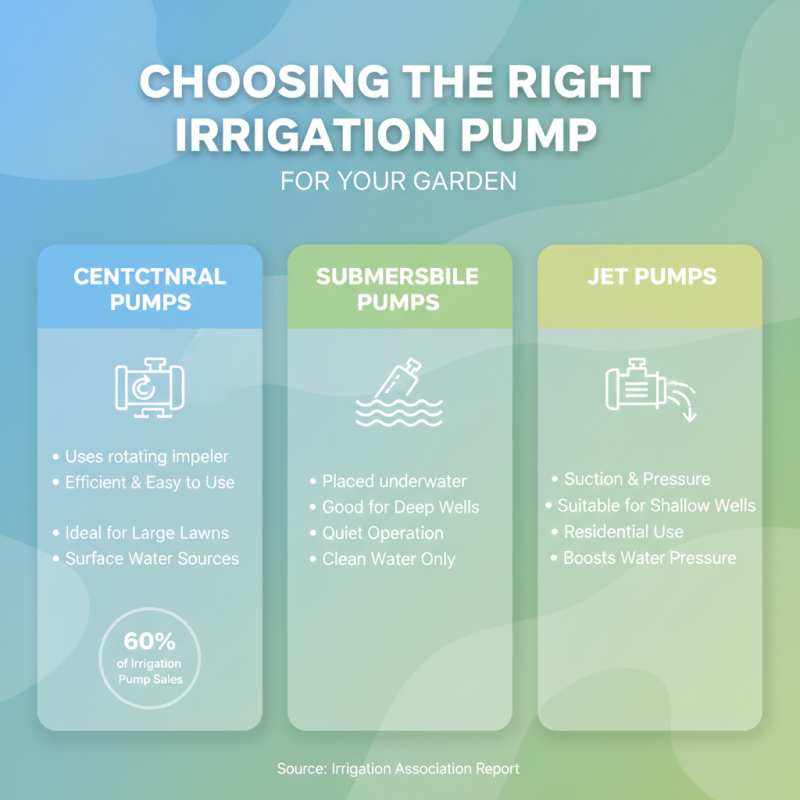
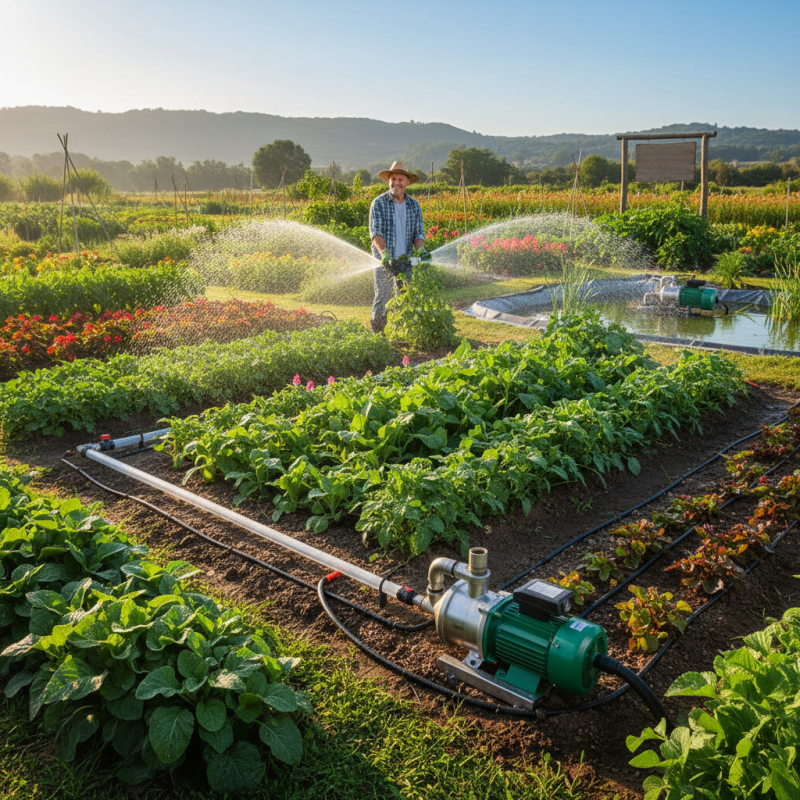
When selecting the right irrigation pump for your garden, it's essential to understand the various types available in the market. The primary categories include centrifugal pumps, submersible pumps, and jet pumps, each tailored to different gardening needs. Centrifugal pumps, which utilize a rotating impeller to move water, are widely favored for their efficiency and ease of use, making them ideal for large-scale lawn irrigation. According to a report by the Irrigation Association, centrifugal pumps account for about 60% of all irrigation pump sales due to their reliability in handling surface water sources.
Submersible pumps, on the other hand, are designed to be submerged underwater, making them suitable for wells and deep water sources. Their effectiveness is underscored by a study from the U.S. Department of Agriculture, which indicates that submersible pumps can maintain high performance levels with minimal electricity consumption, making them an excellent option for eco-conscious gardeners. Jet pumps, suitable for shallow wells, are praised for their ability to lift water from modest depths and find applications in small gardens where space and resources are limited.
Understanding these fundamental types ensures that gardeners can make informed decisions tailored to their specific irrigation needs, optimizing water use and supporting sustainable gardening practices.
Key Factors to Consider When Selecting an Irrigation Pump for Garden Use
When selecting the best irrigation pump for your garden, several key factors must be considered to ensure efficient water delivery and optimal plant growth. Firstly, assess the water source. According to the Irrigation Association, understanding whether the pump will draw from a well, river, or reservoir can significantly influence the pump type needed. For instance, submersible pumps are ideal for deep wells, while surface pumps effectively draw water from shallow sources. It's critical to match the pump's capabilities with your water source characteristics to guarantee reliable performance.
Another important consideration is the flow rate and pressure required for your irrigation system. Data from the American Society of Agricultural and Biological Engineers indicates that most garden irrigation systems operate effectively at flow rates between 5 to 10 gallons per minute. This range is sufficient for typical garden sizes and ensures that plants receive adequate water without wasting resources. Additionally, consider the elevation difference if your garden is on a slope; a pump with adequate pressure will be necessary to push water uphill, as each foot of elevation change can require an additional 0.43 PSI.
Lastly, the type of irrigation method chosen—whether drip, sprinkler, or soaker hose—affects the pump selection. Drip irrigation systems call for consistent low-pressure pumps, while sprinkler systems may require higher flow rates and pressures. According to market research by Grand View Research, the increasing adoption of water-efficient irrigation systems underscores the necessity of carefully matching pump specifications to irrigation needs. Selecting the right pump can significantly enhance water efficiency and crop yield in your garden.
Ultimate Guide to Choosing the Best Irrigation Pump for Your Garden
This chart illustrates the key factors to consider when selecting an irrigation pump for garden use. We have analyzed common metrics that gardeners prioritize when choosing an irrigation pump, including Flow Rate, Power Consumption, Noise Level, and Durability.
Evaluating Pump Performance: Flow Rate, Pressure, and Power Requirements
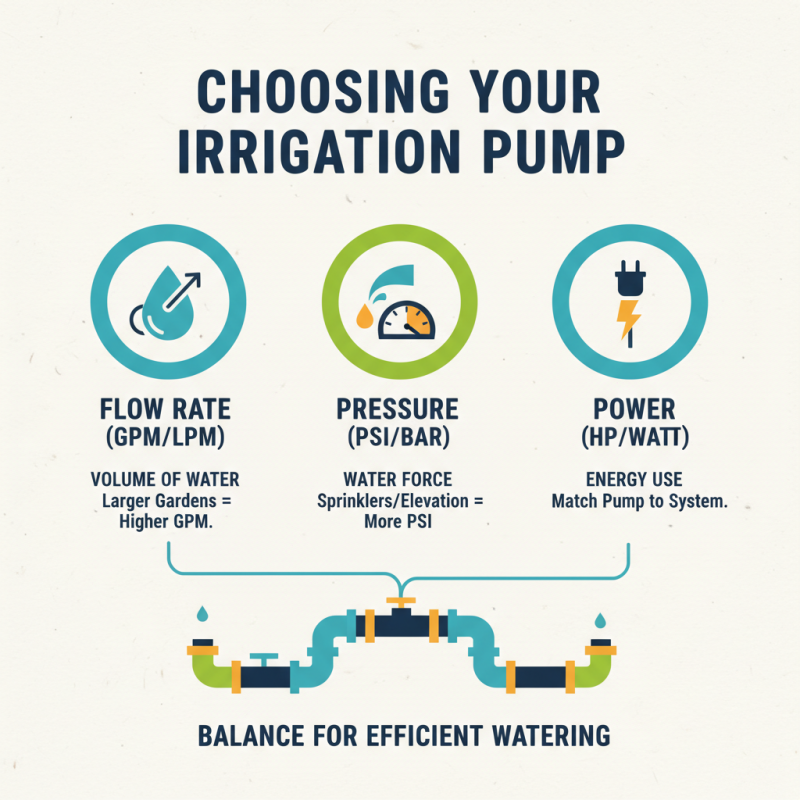
When selecting the right irrigation pump for your garden, evaluating its performance is crucial. Three primary factors to consider are flow rate, pressure, and power requirements. The flow rate indicates how much water the pump can deliver over a specified period, usually measured in gallons per minute (GPM) or liters per minute (LPM). A higher flow rate is essential for larger gardens or for those with extensive irrigation systems. However, it’s important to match the flow rate with the needs of your plants to avoid overwatering or creating soggy soil conditions.
Pressure is another vital aspect that affects the efficiency of your irrigation system. It refers to the force of the water as it moves through the pipes and out of the sprinkler heads. Adequate pressure ensures that water reaches all areas of your garden evenly. Insufficient pressure may lead to uneven watering, with some plants receiving too much water while others receive too little. Understanding the pressure requirements for your specific irrigation setup will help ensure that every part of your garden thrives.
Lastly, power requirements can influence both the performance and operational costs of your irrigation pump. Pumps can be powered by electricity, gasoline, or solar energy, each with its own pros and cons. Assessing the most convenient and cost-effective power source for your garden is essential for long-term sustainability. Additionally, consider the energy efficiency of the pump, as this can significantly impact both your utility bills and the overall ecological footprint of your gardening practices.
Comparing Energy Efficiency Ratings of Various Irrigation Pump Models
When selecting the best irrigation pump for your garden, one of the central considerations should be
the energy efficiency ratings of various models. According to the U.S.
Department of Energy, electric pumps can account for up to 30% of
a gardener's energy consumption. Therefore, understanding the efficiency ratings of irrigation pumps is
crucial not only for reducing energy costs but also for minimizing the environmental impact.
Many manufacturers provide Energy Efficiency Ratio (EER) ratings, which can help you compare the
energy consumption of different pumps effectively. A higher EER indicates a more efficient pump, which
can save you money in the long run.
Research from the American Society of Agricultural and Biological Engineers highlights that
energy-efficient pumps can reduce operational costs by nearly
25% compared to less efficient models. Features such as
variable-speed drives, which adjust power usage based on the water demand, can further enhance
energy efficiency. Additionally, the implementation of systems like drip irrigation
in conjunction with high-efficiency pumps illustrates how combining technologies can lead to
optimal water usage, further improving energy management.
Choosing the right pump based on these efficiency ratings not only supports sustainable gardening practices
but also promotes a healthier ecosystem overall.
Maintenance Tips to Ensure Longevity and Optimal Performance of Irrigation Pumps
Proper maintenance of irrigation pumps is crucial for ensuring their longevity and optimal performance in gardens. According to recent industry data, regular maintenance can extend the lifespan of an irrigation pump by up to 50%. Key maintenance practices include checking the power supply, inspecting the pump's seals and gaskets for leaks, and ensuring that the impeller is free of debris. Neglecting these checks can lead to costly repairs and inefficient watering, as even minor wear can significantly affect performance.
Additionally, it is essential to clean the pump filter and intake screen regularly to prevent clogging that can reduce water flow. A study published by the Irrigation Association indicates that pumps that are not regularly maintained can suffer a drop in efficiency of over 30%. Gardeners should also consider seasonal maintenance, such as winterizing the pumps to protect them from freezing temperatures, which can cause irreversible damage. By following these maintenance tips, garden enthusiasts can not only enhance the durability of their irrigation systems but also contribute to water conservation efforts through improved efficiency.
Ultimate Guide to Choosing the Best Irrigation Pump for Your Garden Tips - Maintenance Tips to Ensure Longevity and Optimal Performance of Irrigation Pumps
| Irrigation Pump Type |
Flow Rate (GPM) |
Horsepower (HP) |
Energy Efficiency (kWh) |
Typical Use |
Maintenance Frequency |
| Submersible Pump |
10 - 20 |
0.5 - 1.5 |
120 - 240 |
Residential Gardens |
Every 6 months |
| Portable Pump |
5 - 15 |
1 - 3 |
100 - 200 |
General Purpose |
Every 3 months |
| Jet Pump |
8 - 25 |
0.75 - 2 |
150 - 300 |
Wells and Deep Water Sources |
Every year |
| Centrifugal Pump |
10 - 30 |
1 - 5 |
200 - 400 |
Large Gardens and Farms |
Every 6 months |