What is a Deep Well Water Pump and How Does It Work?
Deep well water pumps are essential in various industries, providing a reliable source of water from underground aquifers. According to the International Water Management Institute, over 2 billion people rely on such systems for irrigation and domestic use. This underscores the vital role these pumps play in ensuring water availability.
John Smith, an expert in water resource management, noted, "Deep well water pumps are the backbone of sustainable water supply systems." His insight reflects the growing dependency on these pumps in agriculture, where they optimize water use and enhance food security. However, the efficiency of deep well water pumps can vary significantly.
Challenges include maintenance issues and the risk of over-extraction from aquifers. These factors can lead to dwindling water levels, prompting reflection on sustainable practices. As we delve deeper into understanding the mechanics and applications of deep well water pumps, it becomes clear that while they are crucial, their management requires careful consideration and innovative solutions.
Definition of a Deep Well Water Pump and Its Purpose
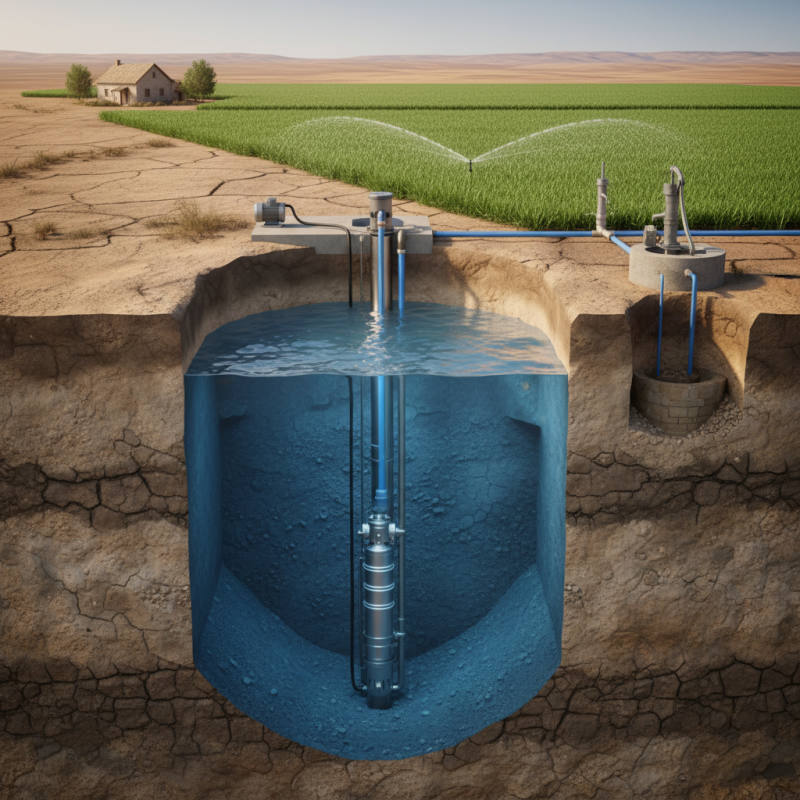
A deep well water pump is a specialized device used to extract water from deep underground sources. These pumps are typically utilized in areas where surface water is scarce. They function by drawing water from wells that reach significant depths, often exceeding 25 feet. The primary purpose of a deep well pump is to provide a reliable water supply for homes, farms, and industrial uses.
Deep well pumps operate through motorized mechanisms, which can be either submersible or jet pumps. Submersible pumps work underwater, pushing water up to the surface. This can be efficient but also has potential issues with maintenance. Jet pumps, on the other hand, are located above ground and work by creating a vacuum to pull water up. However, they can struggle with very deep wells.
It's worth noting that the selection and maintenance of deep well pumps are critical. Factors like well depth, water quality, and pump location matter significantly. Users must regularly check for issues like clogging or motor malfunctions. Regular inspections are needed to ensure the pump functions properly. Not everyone realizes this, leading to unexpected water shortages in critical moments.
Components of a Deep Well Water Pump and Their Functions
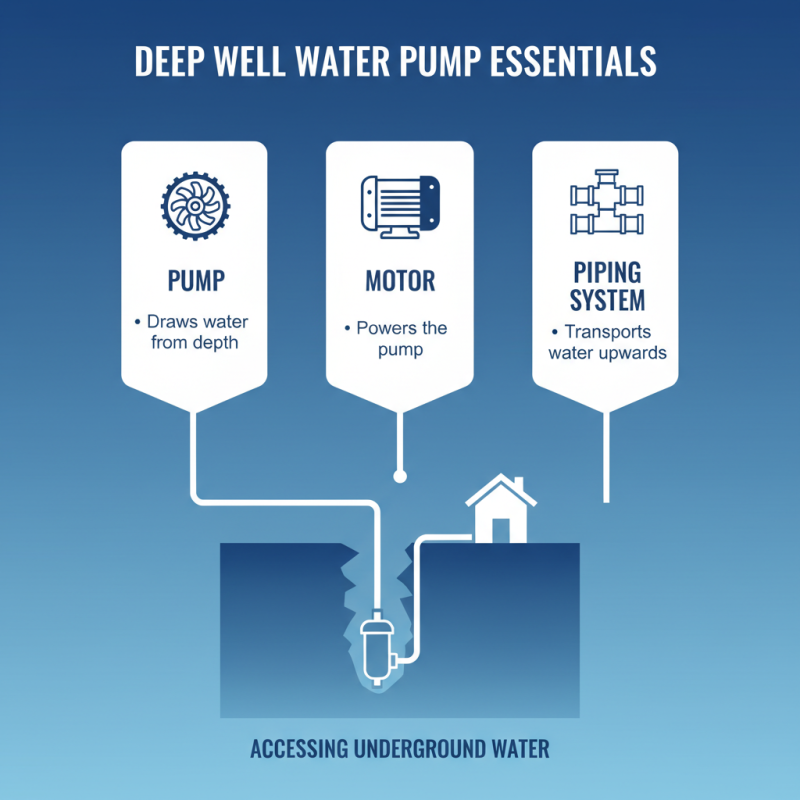
A deep well water pump is essential for accessing underground water. Its components work together to draw water from significant depths. The main parts include the pump, motor, and piping system. Understanding their roles is crucial for effective operation.
The pump contains an impeller that spins quickly. This motion creates a vacuum, drawing water into the system. The motor provides the necessary power for this action. A suitable motor is vital to prevent overheating and ensure efficiency.
Tips: Regular maintenance improves pump lifespan. Check for loose connections often. Additionally, inspect the pump for wear and tear.
The piping system transports water to the surface. This system should be durable to withstand pressure. Ensure there are no leaks along the pipes. Taking time to inspect can save you future headaches.
Many overlook how depth affects pumping efficiency. Deep wells require more energy. If the pump is not sized correctly, it will struggle. This results in reduced water flow. Always consider the well's depth when choosing a pump.
How Deep Well Water Pumps Operate: A Step-by-Step Process
Deep well water pumps are vital for accessing underground water sources. They operate by drawing water from deep within the earth. Typically, a submersible pump is submerged in the well. This pump pushes water up through a pipe to the surface.
Understanding how deep well pumps work can help in maintenance. The process begins with the pump being placed below the water level. When powered, the pump creates a vacuum, pulling water into its inlet. The impellers then spin rapidly, pushing water upward. Gravity helps in transporting the water to the surface through the discharge pipe.
**Tips:** Regularly check the pump's electrical components. Look for any signs of wear. Clean the intake filter frequently to ensure smooth operation.
Some deep well pumps may face common issues. For instance, sediment buildup can hinder performance. This is often overlooked during inspections. It’s essential to periodically flush the system to remove debris. Remember, even the best systems need attention.
What is a Deep Well Water Pump and How Does It Work? - How Deep Well Water Pumps Operate: A Step-by-Step Process
| Pump Type |
Depth Range (Feet) |
Flow Rate (GPM) |
Power Source |
Common Uses |
| Submersible Pump |
100 - 400 |
5 - 80 |
Electric |
Residential, Irrigation |
| Jet Pump |
0 - 100 |
10 - 120 |
Electric or Gas |
Shallow Wells, Yard Irrigation |
| Turbine Pump |
200 - 2,000 |
20 - 1,000 |
Electric |
Agriculture, Municipal Water Supply |
| Hand Pump |
0 - 30 |
Varies |
Manual |
Emergency Use, Remote Areas |
Advantages and Disadvantages of Using Deep Well Water Pumps
Deep well water pumps are popular for accessing groundwater. They have their own pros and cons. Understanding these is vital for every homeowner.
One significant advantage is efficiency. Deep well pumps can access water from great depths. This is crucial in regions with low groundwater. They can supply ample water for irrigation or household use. However, they require substantial installation costs. Regular maintenance is important too. Neglect could lead to costly repairs.
Tips: Regular checks can prevent problems. Inspect the electrical system often. Ensure the pump operates smoothly. If the water flow decreases, investigate immediately.
On the downside, noise from the pump can be an issue. Some users find it disruptive. Additionally, these pumps often require a specialized installation. Not all contractors can handle them. This can lead to delays and even extra expenses.
Tips: Choose an experienced installer. Research thoroughly before making a decision. Ask for recommendations from neighbors. The right choice can save time and money.
Maintenance Tips for Ensuring Efficient Operation of Deep Well Water Pumps
Deep well water pumps require regular maintenance to function efficiently. Checking the power supply is essential. A faulty connection can lead to issues. Make sure all electrical components are in good condition and free from wear. Wear safety gloves when handling electrical parts.
Cleaning the well and pump is also important. Debris can obstruct water flow. Periodic inspections help identify potential problems early. Look out for signs of rust or corrosion. Even small leaks can worsen over time. Address these issues promptly to avoid costly repairs later.
Water quality should not be overlooked. Test it regularly for contaminants. Poor water quality can damage the pump and affect efficiency. If the water looks cloudy or has an unusual smell, address it immediately. A proactive approach can extend the pump's lifespan and maintain optimal performance.