What is a Water Pump Motor and How Does it Work?
A water pump motor is an essential component of many water systems. It powers the movement of water, making tasks easier in various industries. Experts in this field emphasize its significance. John Smith, a renowned water systems engineer, states, "A reliable water pump motor is vital for efficiency and safety."
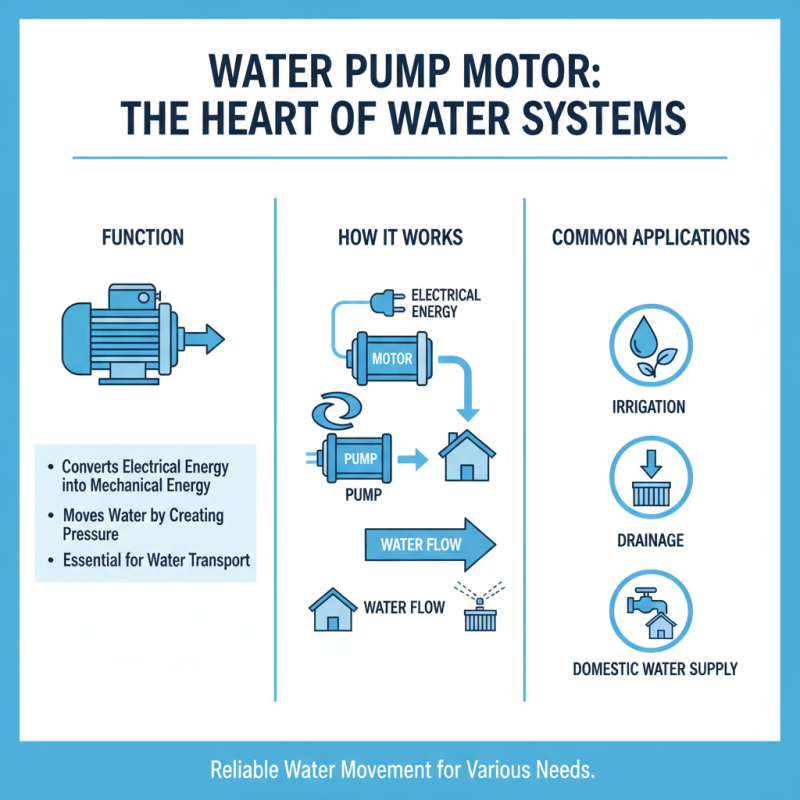
Understanding how a water pump motor works can help maximize its performance. It converts electrical energy into mechanical energy. This process drives the pump, allowing water to flow efficiently. However, choosing the right motor can be challenging. Many options exist on the market, each with different specifications.
It's easy to overlook the maintenance of a water pump motor. Regular checks can prevent significant issues down the line. Users often forget to inspect for wear and tear. This can lead to unexpected failures and costly repairs. A well-maintained motor ensures a longer lifespan and optimal operation. Being aware of these factors is crucial for anyone relying on a water pump motor.
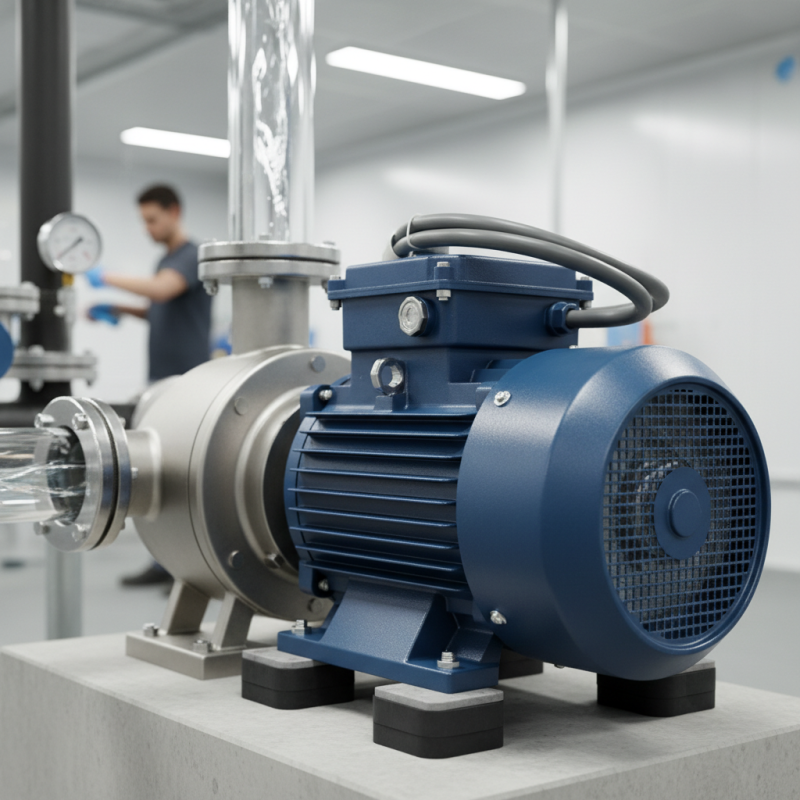
What is a Water Pump Motor? Definition and Overview
A water pump motor is a crucial component in many water systems. It converts electrical energy into mechanical energy to move water. These motors are used in various applications, such as irrigation, drainage, and domestic water supply. Their main role is to create the necessary pressure to transport water from one location to another.
Understanding how a water pump motor works requires some basic knowledge of physics. When powered, the motor's rotor spins, driving the attached pump. This action generates suction, pulling water into the pump and forcing it out through the discharge outlet. The effectiveness of water flow depends on several factors, including motor power and pump design.
There are common challenges with water pump motors. Overheating can occur if not correctly sized for the task. Additionally, improper installation may lead to reduced efficiency. Users should regularly monitor performance to identify potential issues. Recognizing these mistakes can help enhance the lifespan and efficiency of the equipment.
Key Components of a Water Pump Motor
A water pump motor is crucial for moving water in various applications. Understanding its key components helps in troubleshooting and maintenance. The motor, usually an electric one, provides the power needed to drive the pump. The pump itself is where the magic happens. It converts mechanical energy into hydraulic energy, pushing water through pipes.
Another important component is the impeller. This part spins rapidly, drawing water in and pushing it out. Its design impacts efficiency. The casing, which encases the impeller, influences the pressure and flow rate of the water. A well-sealed casing prevents leaks and maintains pressure, ensuring the motor works effectively.
Tips: Regular maintenance can extend the motor's lifespan. Check for unusual sounds or vibrations. These can signal an issue. Clean filters regularly to prevent clogging. Remember, a little preventive care goes a long way. Keeping an eye on water quality can also impact the longevity of components. If sediment builds up, it can damage your motor over time.
How a Water Pump Motor Operates: A Step-by-Step Mechanism
A water pump motor is vital for moving water efficiently. It converts electrical energy into mechanical energy. This process involves several key components. The common parts include the motor, impeller, and casing. Each plays a crucial role in water transportation. The motor drives the impeller, creating suction. This action pulls water into the pump.
In practical terms, when the motor activates, it spins the impeller rapidly. The shape of the impeller helps to increase water pressure. As water enters, it flows out through the discharge valve. Industry reports show that effective pumps can achieve efficiency ratings exceeding 85%. This highlights the importance of proper selection and maintenance. When the motor is running, ensure that the inlet and outlet are clear. This can enhance pump performance significantly.
Tips: Regular maintenance is essential. Inspect the motor and connections periodically. Watch for unusual noises or vibrations. These could indicate underlying issues. Minor faults can lead to major problems, so early detection is key. Additionally, choosing the right motor size for your needs can save energy. Oversized motors often consume more power than necessary. Always refer to performance graphs for optimal performance settings.
What is a Water Pump Motor and How Does it Work?
| Component |
Function |
Material |
Common Types |
| Motor |
Drives the pump and creates flow |
Copper, aluminum |
AC, DC |
| Pump Casing |
Houses internal components and contains fluid |
Plastic, stainless steel |
Centrifugal, diaphragm |
| Impeller |
Increases the velocity of the fluid |
Plastic, bronze, stainless steel |
Single-stage, multi-stage |
| Suction Pipe |
Draws fluid into the pump |
PVC, metal |
Rigid, flexible |
| Discharge Pipe |
Carries fluid away from the pump |
PVC, metal |
Rigid, flexible |
Common Types of Water Pump Motors and Their Applications
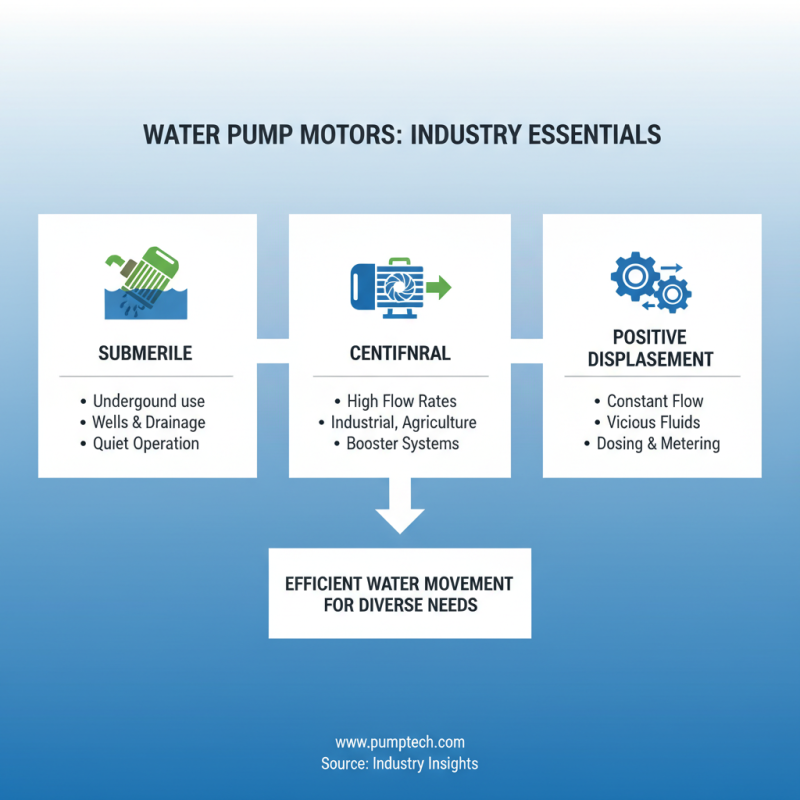
Water pump motors play a vital role in various industries. They are designed to move water efficiently. Common types include submersible, centrifugal, and positive displacement motors. Each has unique applications that cater to specific needs.
Submersible motors are often used in deep water applications. They operate underwater, allowing them to pump water from wells or reservoirs. These motors can handle high pressures, making them suitable for agriculture and irrigation. According to industry data, submersible pumps can achieve efficiencies of up to 80%, highlighting their effectiveness.
On the other hand, centrifugal motors are prevalent in municipal water supplies. They are ideal for moving large volumes of water quickly. These motors can face challenges, like cavitation, which limits performance. Positive displacement motors, although less common, excel in applications requiring consistent flow, like in hydraulic systems. However, they can be less efficient under varying load conditions, leading to operational concerns. Understanding these variations is crucial for optimizing performance and efficiency in water management systems.
Performance Metrics: Efficiency Ratings and Power Consumption in Motors
When discussing water pump motors, efficiency ratings and power consumption are crucial aspects. The performance of a motor can be gauged by its efficiency, which refers to how effectively it converts electrical energy into mechanical energy. According to industry studies, high-efficiency motors can achieve ratings of 90% or higher. However, many standard motors operate at only 70-80% efficiency. This discrepancy can lead to significant energy waste, affecting overall operational costs.
Power consumption is another critical metric. A motor with a lower efficiency rating will consume more electricity to perform the same task as a more efficient counterpart. For instance, a poorly rated motor may use 10 to 15% more energy for pumping water. This added consumption not only raises utility expenses but also increases the environmental footprint of the operation. Regular audits and reevaluation of motor choices can help identify potential savings.
Additionally, performance metrics should not overshadow the importance of proper maintenance. An inefficiently maintained motor can underperform, regardless of its inherent efficiency rating. Factors like wear, debris build-up, and improper alignment can drastically impact performance. According to a report by the U.S. Department of Energy, maintaining pumps can lead to an efficiency increase of up to 20%. Hence, users must rethink their approach to both motor selection and upkeep.
Water Pump Motor Performance Metrics